

Introduction
Our pets are more than just animals they’re beloved family members. Healthypet First Aid Just like children, pets can get into trouble unexpectedly: a cut from broken glass, a sudden allergic reaction, or even a choking hazard. In these critical moments, being prepared with the right first aid knowledge and supplies can save your pet’s life. That’s where this comprehensive healthypet first aid guide comes in.
This blog post is your all in one resource for creating a pet first aid kit, handling common emergencies at home, and knowing when to seek professional help. Let’s make sure you’re ready for anything that comes your furry friend’s way.
Why Pet First Aid Matters
According to veterinarians, immediate first aid care during an emergency can significantly improve your pet’s chances of survival. A 2020 study from the American Veterinary Medical Association (AVMA) revealed that over 80% of pet emergencies happen at home or during everyday activities. Having a healthypet com first aid kit and basic knowledge can help stabilize your pet until you can reach a vet.
Pets can’t communicate their pain the way humans do. They rely on us to recognize when something’s wrong. Being equipped with the right tools and information gives you confidence and your pet a better shot at recovery.
Building Your Pet First Aid Kit
Must-Have Medical Supplies
Creating a reliable pet first aid kit begins with assembling the right medical essentials:
- Sterile Gauze Pads & Rolls: For wrapping wounds
- Adhesive Tape: To secure bandages
- Hydrogen Peroxide (3%): To induce vomiting in poisoning cases (only under vet supervision)
- Digital Thermometer: Rectal thermometers work best for pets
- Antiseptic Wipes: To clean wounds
- Scissors & Tweezers: For cutting bandages and removing foreign objects
- Saline Solution: For eye or wound irrigation
Medications to Keep
- Antihistamines: For allergic reactions (check dosage with your vet)
- Styptic Powder: Stops bleeding quickly (especially for nail trims)
- Anti-diarrheal Medicine: Vet-approved only
- Activated Charcoal: For toxin absorption
Safety & Restraint Tools
- Muzzle: Even gentle pets may bite when in pain
- Leash & Collar: To keep your pet secure during first aid
- Towel or Blanket: Useful for restraint or to keep them warm
Dog vs. Cat Kit Variations
Cats may require smaller tools, such as nail clippers, and are more sensitive to certain medications. Always consult your veterinarian when customizing your kit.
Step-by-Step Pet First Aid Tips
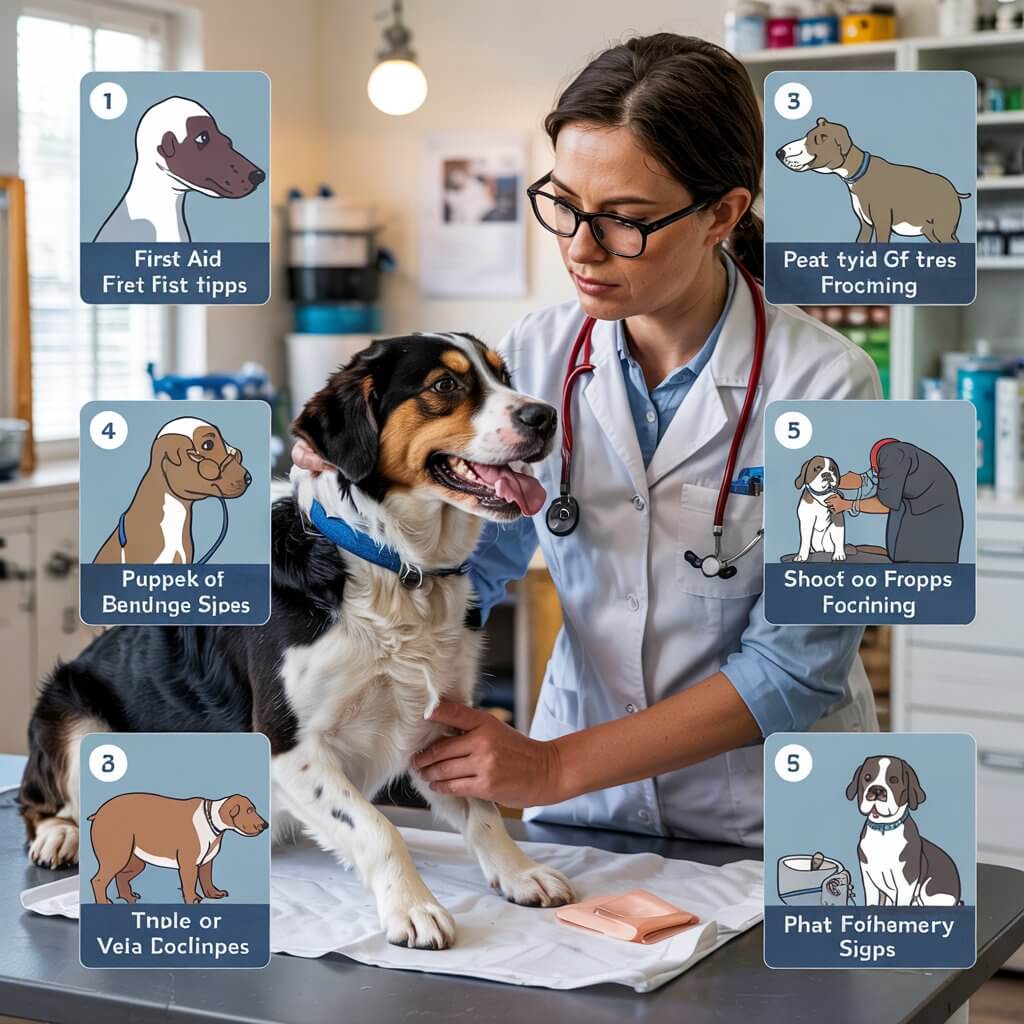
Treating Cuts and Scrapes
- Muzzle your pet if necessary.
- Clean the wound with saline or antiseptic.
- Apply gauze and wrap loosely with adhesive tape.
- Monitor for swelling or infection.
Handling Broken Bones
- Don’t try to set the bone.
- Immobilize the limb with a soft splint (towel or cardboard).
- Transport to the vet immediately.
Pet CPR Techniques
For Dogs and Cats:
- Lay your pet on its right side.
- Compress the chest at 1/3 its width (100–120 compressions per minute).
- Give two rescue breaths for every 30 compressions.
- Continue until your pet breathes or help arrives.
Poisoning Response
- Identify what was consumed.
- Call your vet or a pet poison helpline.
- Do NOT induce vomiting unless instructed.
- Administer activated charcoal if advised.
Common Emergency Scenarios
Choking
- Open pet’s mouth carefully
- Remove visible object with tweezers
- Perform Heimlich maneuver if needed
(firm upward thrusts under ribcage)
Heatstroke
- Move to a cool area
- Wet your pet with lukewarm water
- Offer water but don’t force it
- Transport to vet ASAP
Seizures
- Clear area around pet
- Don’t restrain or touch mouth
- Time the seizure
- Contact vet immediately
Allergic Reactions
- Symptoms: swelling, hives, vomiting
- Administer antihistamines (as per vet)
- Head to emergency clinic
Keeping a Digital Pet Medical File
Having digital access to your pet’s medical history can be a lifesaver:
- Vaccination records
- Allergies & medications
- Previous illnesses or surgeries
- Emergency contacts & vet details
Use apps or cloud storage to access this info anytime, anywhere.
When to Go to the Vet vs Home Care
Treat at Home:
- Minor cuts
- Mild allergic reactions
- Mild diarrhea
Go to the Vet:
- Difficulty breathing
- Heavy bleeding
- Seizures
- Suspected poisoning
Emergency vet alternatives: Use telehealth services for instant guidance when a clinic is far or closed.
Advanced First Aid Practices and Pet Safety Awareness
While having a Pet First Aid Kit is essential, ongoing awareness and training are equally important. As part of your commitment to pet safety, consider taking a certified pet first aid course. These programs, offered by many veterinary hospitals and pet care organizations, provide hands-on experience in CPR, wound care, and more.
Also, keep your healthypet com first aid supplies updated. Check expiration dates on medications, replace used items, and adjust the kit contents as your pet ages or develops health conditions. For instance, senior pets might need joint support or additional medications, while puppies may require special teething gels or chew-safe items.
Preventive Measures
A huge part of pet first aid is actually preventing emergencies. Here’s how you can reduce risk:
- Pet-proof your home by removing toxic plants, securing electrical cords, and keeping cleaning products out of reach.
- Train your pets to avoid harmful behaviors, such as eating non-food items or running off-leash in unsafe areas.
- Schedule regular vet checkups to catch potential health issues early.
Preventive care is the first step in a solid healthypet com first aid strategy. It minimizes your chances of needing emergency intervention and gives your pet a healthier life overall.
Travel First Aid Tips
If you travel often with your pet, your first aid preparedness shouldn’t stay at home. Create a travel-size Healthy pet first aid kit to keep in your car or pet travel bag. Include items like motion sickness meds, collapsible water bowls, extra leashes, and vaccination documents.
Know where local emergency vet clinics are located in the area you’re visiting. Google Maps can save locations for quick access.
Multi-Pet Households
For homes with multiple pets, tailor your kit to include different sizes of bandages, medications, and muzzles. Label everything clearly, and maintain separate records for each pet. A well-organized system makes your healthypet com first aid setup even more efficient during stressful situations.
Final Paw-spective: Ready, Set, Rescue!
Taking care of a pet means being ready for both the joyful cuddles and the unexpected emergencies. With the healthypet com first aid guide at your fingertips, you now have the knowledge and tools to act fast, smart, and with confidence when every second counts.
By equipping yourself with a well-stocked first aid kit, learning emergency procedures, and practicing regular safety checks, you’re doing more than just pet parenting you’re becoming a life-saver. Remember, your pet relies on you to notice the signs, make quick decisions, and stay calm under pressure.
Whether it’s a scratched paw, a sudden seizure, or a choking scare, this guide empowers you to bridge the gap between the accident and professional help. That peace of mind is priceless for you and your furry friend.
Keep learning, stay prepared, and make healthypet com first aid an everyday part of your pet care routine. Because when you’re prepared, you’re powerful.
Dog first aid kit with essential medical supplies for pet emergencies
A well-organized dog first aid kit containing essential medical items such as gauze, adhesive tape, scissors, tweezers, antiseptic wipes, and a thermometer. This kit is designed to provide immediate care for pets in emergency situations, ensuring that pet owners are prepared for cuts, wounds, or other injuries.


